Sussex Chickens: The Old English Breed
Sussex chickens originated in England and is a great dual purpose bird.
Sussex Chickens, The Facts:
Class: Standard: English / Bantam: Single Comb, Clean Legged
Size: Standard Male: 9 Ibs. / Standard Female: 7 Ibs. / Bantam Male: 36 oz. / Bantam Female: 32 oz.
Comb, Wattles & Earlobes: They have a medium-size single comb that has five upright, well defined points. They have medium size earlobes and their wattles are small to medium in size and well rounded. All are bright red.
Color: Their eyes are reddish bay and their shanks and toes are white in all varieties.
Birchen: The beak is swarthy horn and they have standard Birchen plumage.
Buff: Standard buff plumage with a horn beak.
Dark Brown: Standard dark brown plumage with a horn beak.
Light: The "light" meets the same criteria as the standard Columbian
plumage. They have a horn beak.
Red: The "red" meets the same criteria as the standard black tailed red plumage. They have a horn beak.
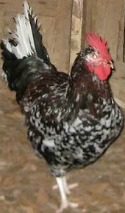
Speckled: The overall plumage is mahogany and their feathers are tipped in a white spangle that is separated from the mahogany by a band of black. Their beak is a pinkish horn color.
White: They have standard white plumage with a white beak.
Place of Origin: England
Conservation Status: Threatened
Special Qualities: They are a great dual purpose bird.
This breed was the primary provider of meat and eggs for the London market for almost a hundred years. It never quite gained the same following in North America, maybe because of it's pink colored skin as opposed to yellow, but they are still a very productive breed.
This is a very old breed and the history is somewhat unclear. They can be traced back to at least pre-1845 in England, but some poultry historians believe that they were brought to England by the Romans almost two thousand years prior. Some believe that the they share lineage with the Dorking. They believe that they came from the same strain of bird with the five toed offspring becoming Dorkings and the four toed becoming Sussex Chickens.
The breed was about to die out at the turn of the twentieth century, until some dedicated poultry men in Sussex rejuvenated the breed, believing that it would have been a travesty to have such a fine bird who was formed in their community to die out.
Sussex Chickens are adaptable to either confinement or free range and is a calm and curious bird that does well for backyard chicken growers. The hens lay a fair amount of medium size eggs and are good mothers.
The breed was first admitted into the APA in 1914.


Custom Search
New! Comments
Have your say about what you just read! Leave me a comment in the box below.